
The plums are the hero. We just keep out of the way.
Eight ingredients. One co-packer. A handful of small Georgian farms — and a fermentation tradition that never needed a rebrand. Here's the whole supply chain.
What's actually in a jar of Malli
The whole ingredient list, in order: wild plums, fresh cilantro, fresh dill, garlic, blue fenugreek, sea salt. Red Tkemali adds a little fresh mint. That's it. No additives, no added sugar, no artificial coloring, no preservatives, no “natural flavors,” no citric acid shaken out of a bag. Malli is non-GMO, gluten-free, and contains no added preservatives.
The acidity from the plums themselves does the preserving — it's how Tkemali has lasted for 5,000 years without a refrigerator. That same acidity is what makes Malli a fermented, living sauce instead of a shelf-stable syrup.
Why wild plums
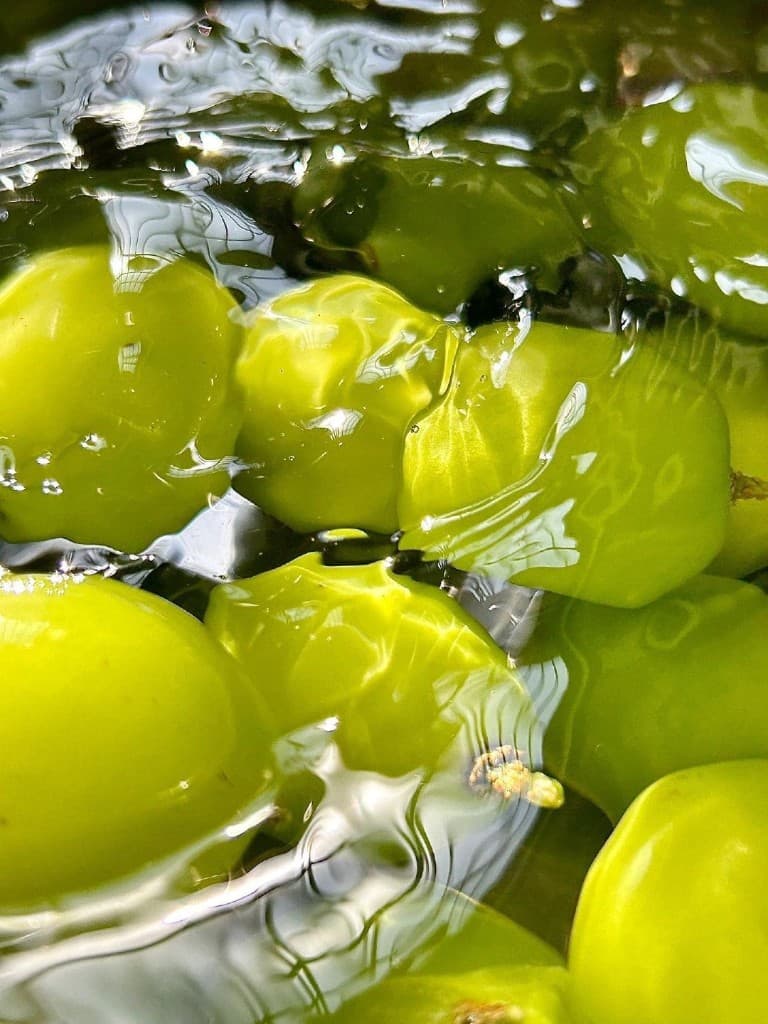
Wild plums are different from the plums you buy at the grocery store. They're smaller. The skin-to-flesh ratio is higher, which matters because most of a plum's polyphenols live in the skin. They grow in stressed environments — hot summers, cold winters, dry spells — which causes the tree to produce more protective compounds. They aren't bred for size or sweetness, which usually comes at the expense of flavor density.
They're also seasonal. Green plums are picked in late spring, red plums in late summer. There is no “all year” harvest. When we say we run out of a batch, we mean it.
How it gets here
- 01
Wild forests in Georgia
Plums are foraged from forests and small family plots in the Kakheti and Imereti regions of Georgia, primarily by hand, twice a year.
- 02
Cooked & fermented in Marneuli
Within 48 hours of picking, the plums are cooked with herbs, garlic, and salt at our co-packer in Marneuli — then cooled and jarred at peak flavor. A facility chosen for its small-batch standards and respect for traditional fermentation.
- 03
Sealed, shipped, sold
Jars are sealed, palletized, shipped to our US warehouse, and sent to your door.